
WanderToMiles


The argument in favor of using filler text goes something like this: If you use real content in the Consulting Process, anytime you reach a review point you’ll end up reviewing and negotiating the content itself and not the design.




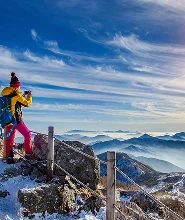


Tucked inside a natural amphitheatre of Himalayan giants, Annapurna Base Camp (ABC) sits at 4,130 metres, ringed by Annapurna I (8,091m), Annapurna South, Machapuchare (Fishtail Mountain), and Hiunchuli. But the “base camp” itself is really just the final page of the story — the real adventure unfolds over the days it takes to walk there, through forests, villages, and river valleys that change character almost daily. Here’s what makes the ABC trek, also known as the Annapurna Sanctuary trek, one of Nepal’s most rewarding journeys.
Nothing on this trek compares to standing inside the Annapurna Sanctuary as first light hits the surrounding summits. Many trekkers plan an overnight stay at Base Camp specifically to catch both sunset and sunrise, watching the peaks shift from deep blue to gold to blazing white. If your itinerary includes Poon Hill, add that sunrise too — it’s one of the most photographed viewpoints in the region, with Dhaulagiri, Annapurna South, and Fishtail Mountain lined up along the horizon.
After days of climbing stone steps, the natural hot springs at Jhinu Danda, beside the Modi Khola river, are a genuine reward. A short walk downhill from the village leads to mineral-rich pools where tired legs finally get to rest. Most itineraries schedule this stop on the way back down, making it the perfect way to unwind before returning to Pokhara.
Villages like Ghandruk and Chhomrong are as much a part of the experience as the mountains themselves. Stone houses, terraced fields, and prayer flags mark this Gurung and Magar heartland. In Ghandruk, the Gurung Cultural Museum offers a glimpse into local history and the region’s long ties to the Gurkha regiments. Slowing down here, rather than rushing to the next stop, is often what trekkers remember most fondly.
Few treks pack in this much ecological variety over such a short distance. The trail moves from subtropical forest and rice terraces near Nayapul into rhododendron and oak forest around Ghorepani — reportedly the largest rhododendron forest in the world, in full bloom from March to April — then bamboo groves near Sinuwa, and finally bare alpine moraine on the approach to Machapuchare Base Camp and ABC itself. Each day’s walk feels like a different country.
The Annapurna Conservation Area protects a wide range of species. Watch for langur monkeys in the lower forests and Himalayan tahr grazing on steep slopes higher up; musk deer turn up occasionally too. Birdwatchers should scan the rhododendron canopy for the Danphe, Nepal’s vividly coloured national bird, along with eagles riding the thermals above the valley.
With 6,000 and 8,000-metre peaks rising almost directly above the trail, dramatic photo opportunities are constant — golden light on Fishtail Mountain at dawn, prayer flags framing Annapurna South, suspension bridges slung over glacial rivers. After dark, the lack of light pollution at altitude makes for exceptional stargazing; on a clear night, the Milky Way is easily visible from Deurali or Base Camp itself.
The ABC trek runs on its teahouse culture — simple lodges that double as dinner table and dorm room. Dal bhat, Nepal’s staple of rice, lentils, and vegetables, comes with free refills and enough calories to fuel a full day’s walking. Momo dumplings, thukpa noodle soup, and garlic soup (a local favourite believed to help with acclimatisation) round out the menu. Sitting down with trekkers from a dozen different countries, comparing notes on the day’s climb, is its own kind of highlight.
The ABC trek suits fit beginners as well as experienced trekkers — it’s rated moderate, involves four to six hours of walking on most days, and needs no technical climbing skills. Depending on the route, it takes anywhere from 7 to 14 days round-trip from Pokhara; the longer version via Ghorepani and Poon Hill covers more ground and more highlights. Spring (March–May) brings rhododendron blooms, while autumn (September–November) offers the clearest mountain views, with October generally rated the best single month. Every trekker needs an Annapurna Conservation Area Permit (ACAP) and, under current rules, a licensed guide — both are best arranged in Pokhara or Kathmandu before setting out.
However you shape the itinerary, the real destination is the walk itself — a rare stretch of trail where forest, culture, and some of the highest peaks on Earth sit within a single week’s journey.
